The traditional sequence in cosmetic dentistry was to prepare the teeth, take an impression, and see the result at the fitting appointment. That works, but it puts the point of no return before the point of seeing.
Digital smile design reverses that order. The proposed result is designed first, reviewed and adjusted, and only then are the teeth prepared to deliver it.
How it works
1. Records
Photographs and video of your face at rest, speaking and smiling, plus a digital scan of the teeth and an x-ray. The video matters more than people expect: a smile is a moving thing, and how much tooth shows when you speak is as relevant as how it looks in a still photograph.
2. Facial analysis
The design is built in relation to your face rather than to the teeth in isolation. The midline of the teeth against the midline of the face, the curve of the upper teeth against the line of the lower lip, how much gum shows when you smile broadly, and the proportions between the front teeth. This is why two people asking for the same thing receive different designs.
3. The digital proposal
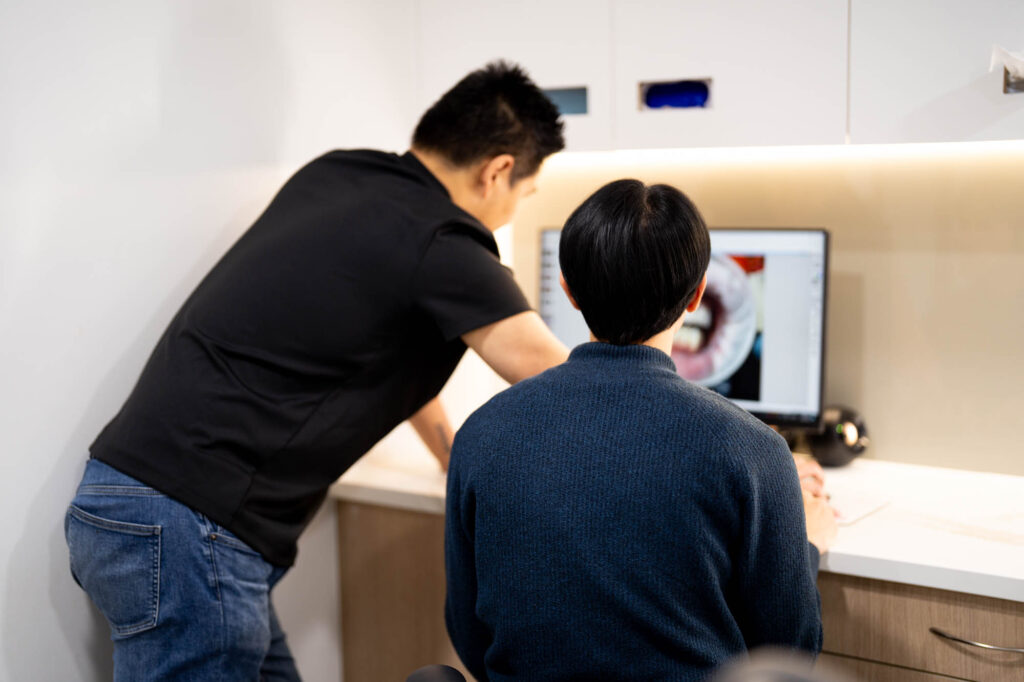
The new tooth shapes are designed over your own photographs and scan, so you see a proposal on your own face rather than a generic illustration. Width, length, edge shape, curvature and colour can all be adjusted at this stage, when adjusting costs nothing.
4. Review, and this is your part
You look at the proposal and say what you think. Too long, too square, too bright, too even. This is the stage where the design is meant to change, and specific feedback is more useful than general approval.
5. A physical preview
The approved design can be transferred into the mouth as a temporary mock-up, made from the digital plan and placed over your existing teeth without preparation. You can see it in your own face, in your own mirror, in daylight, and talk and smile with it. This is the most useful part of the whole process and the point at which most of the remaining adjustments get made.
6. Preparation guided by the plan
Because the final shape is already known, the teeth are prepared only where the design requires it. This tends to mean less enamel removed than preparing first and designing later, which matters because enamel does not grow back.
7. Fabrication and fitting
The final restorations are made to the approved design. At our practice, porcelain veneers and crowns are handcrafted by master ceramists in the group’s dedicated in-house ceramic laboratory, working from the digital plan alongside the treating dentist.
Why the sequence matters
Three practical reasons. You see and approve a proposal before anything irreversible happens. The amount of tooth structure removed is determined by the design rather than by a standard reduction. And everyone involved, including the ceramist, is working to the same explicit target rather than to an interpretation of a verbal description.
It also makes disagreement cheap. Saying the teeth look too long at the mock-up stage costs an adjustment. Saying it at the fitting appointment costs a remake.
What it does not do
A digital design is a plan, not a promise. The final result depends on your existing tooth position, gum contour, bite, enamel thickness and how the ceramic behaves, and a design that looks achievable on screen may need modification once the teeth are prepared. It also does not remove the need for the underlying dentistry: decay, gum disease and grinding are addressed first regardless.
Where teeth are significantly out of position, a design may recommend moving them with clear aligners first, so the veneers can be thinner and less tooth removed. That lengthens the timeline and is often the better plan.
Who it suits
It is most valuable where several front teeth are being treated together, where shape and proportion are changing rather than just colour, and where you want to see a proposal before committing. For a single chipped edge, it is more apparatus than the job requires; composite bonding in one visit is usually the sensible answer there.
What it costs
Digital planning is generally incorporated into the cosmetic treatment plan rather than charged as a separate item, and this is confirmed at consultation. Treatment costs: handcrafted porcelain veneers start from $1,490 per tooth, composite veneers from $700, and porcelain crowns from $1,800. Invisalign, where alignment forms part of the plan, ranges from $4,200 to $8,990. Interest-free payment plans for veneers and crowns are available through external providers, subject to their assessment and approval.
Current fees are on our price list, with more on digital smile design and porcelain veneers.
Common questions
Is the digital preview what my teeth will actually look like?
It is a close plan rather than a promised outcome. The physical mock-up in your mouth is the more reliable preview, and the final result can still differ once the teeth are prepared.
Can I change my mind after seeing the mock-up?
Yes, and that is the point of it. Adjustments at that stage are straightforward, which is why it comes before preparation.
Does this mean less drilling?
It usually means preparation is limited to what the design requires, rather than a standard reduction. How much that is depends on the change being made.
How long does the whole process take?
From records to fitting is typically several weeks, with porcelain veneer cases generally completed within around three weeks of preparation. Alignment beforehand, if recommended, extends that considerably.
Booking an appointment in Canberra City
Civic Gentle Dental Care is a Canberra City dentist at Suite 8, Level 3/161 London Circuit, a short walk from the Canberra Centre. To arrange an appointment, call (02) 6247 0224 or send us a message through our contact page.
This article is general information only and is not a substitute for individual dental advice. Whether a treatment is suitable for you, and what it will involve, can only be determined after an examination by a dentist. Any prices mentioned are estimates drawn from our current price guide and are not a quote.