Enamel is the hardest substance the body produces, and it contains no living cells. That combination means it resists a great deal, and repairs none of it. Once enamel is gone it is gone, and what replaces it is a restoration.
Erosion is different from decay. Decay is bacteria producing acid in localised plaque. Erosion is acid dissolving enamel directly across whole surfaces, and it is increasingly common because of what people drink and how they drink it.
The chemistry, briefly
Enamel begins to dissolve below a pH of about 5.5. For reference, water sits around 7, sparkling water around 5, orange juice around 3.5, most soft drinks around 2.5, and lemon juice around 2. The pH scale is logarithmic, so a soft drink is not twice as acidic as sparkling water, it is orders of magnitude more so.
Saliva buffers the mouth back to neutral over roughly twenty to forty minutes after an acid exposure. That recovery time is the key to everything below.
Frequency beats quantity
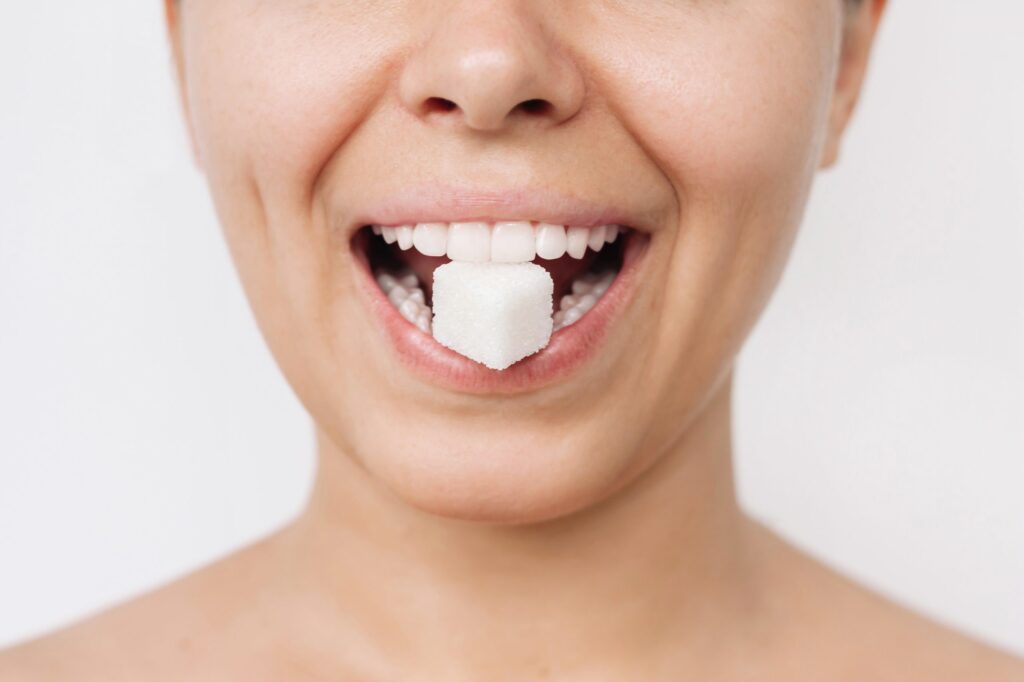
This is the single most useful idea. One can of soft drink with lunch produces one acid episode. The same can sipped across an afternoon produces a continuous acid bath and never lets saliva recover. Nursing a drink is worse for your teeth than drinking it quickly, which runs against most people’s instincts.
The same applies to sweets, dried fruit and anything grazed on throughout the day.
The usual culprits
- Soft drinks, including diet and zero-sugar versions. The sugar causes decay; the phosphoric and citric acid causes erosion, and sugar-free versions still contain it.
- Sports and energy drinks, often consumed slowly during exercise when saliva flow is already reduced by mouth breathing and dehydration. A bad combination.
- Fruit juice and smoothies, healthy in other respects, acidic in this one.
- Sparkling and flavoured waters. Mildly erosive, and the risk comes from sipping them all day.
- Wine, particularly white, and the practice of holding or swirling it.
- Citrus fruit, especially sucking lemon or lime slices.
- Vinegar-based dressings, pickles, and apple cider vinegar taken as a health tonic, which is a notable cause of erosion in the front teeth.
- Chewable vitamin C and some medications.
Acid from the inside
Reflux exposes the teeth to stomach acid, which is considerably stronger than anything in the diet. Erosion from reflux typically shows on the inner surfaces of the upper teeth and the biting surfaces of the lower back teeth, and a dentist may spot it before the reflux has been diagnosed. Vomiting, whether from illness, pregnancy or other causes, has the same effect. If a dentist raises this with you, it is worth following up with your doctor.
What erosion looks like
- Teeth becoming sensitive, particularly to cold and sweet.
- A yellower appearance as thinning enamel lets the dentine beneath show through.
- Edges of the front teeth becoming translucent, then chipping.
- Cupping or dishing on the biting surfaces of molars.
- Fillings that appear to stand proud of the tooth. The filling has not risen; the enamel around it has worn down.
- Teeth becoming shorter over years, which is often attributed to grinding when erosion is contributing.
The changes that actually help
- Keep acidic food and drink to mealtimes. Fewer, shorter exposures.
- Drink it, do not sip it. And use a straw positioned toward the back of the mouth for acidic drinks.
- Rinse with plain water afterwards to dilute the acid immediately.
- Wait at least thirty minutes before brushing. Brushing softened enamel abrades it away. This is one of the few places where brushing at the wrong moment does harm.
- Finish with something alkaline. Cheese, milk or plain yoghurt after an acidic meal helps neutralise and provides calcium and phosphate.
- Chew sugar-free gum after meals to stimulate saliva.
- Use a fluoride toothpaste and spit without rinsing, which helps remineralise softened enamel.
- Water as the default drink. Unglamorous and effective.
What can be done about existing wear
Lost enamel cannot be regrown, but progression can be halted and the damage managed. Fluoride varnish and desensitising treatments help early sensitivity. Composite bonding can rebuild worn edges conservatively. Extensive wear may need crowns or onlays, and where the vertical height of the bite has been lost, the rebuild is a considerably larger undertaking, which is an argument for acting earlier rather than later.
Tooth-coloured fillings at our practice range from $209 to $450, porcelain crowns start from $1,800, and composite veneers start from $700. Current fees are on our price list, with more on fillings and restorations and sensitive teeth.
Common questions
Is sparkling water bad for teeth?
It is mildly acidic, considerably less so than soft drink or juice. Drunk with meals rather than sipped all day, it is a minor concern.
Does sugar-free soft drink protect my teeth?
It removes the decay risk from sugar but not the erosion risk from acid. The acidity is essentially unchanged.
Can enamel be rebuilt?
Early softening can be remineralised with fluoride and saliva. Enamel that has actually been lost does not regrow and has to be replaced with a restoration.
Should I brush straight after a fizzy drink?
No. Rinse with water and wait at least thirty minutes, otherwise you brush away softened enamel.
Booking an appointment in Canberra City
Civic Gentle Dental Care is a Canberra City dentist at Suite 8, Level 3/161 London Circuit, a short walk from the Canberra Centre. To arrange an appointment, call (02) 6247 0224 or send us a message through our contact page.
This article is general information only and is not a substitute for individual dental advice. Whether a treatment is suitable for you, and what it will involve, can only be determined after an examination by a dentist. Any prices mentioned are estimates drawn from our current price guide and are not a quote.