
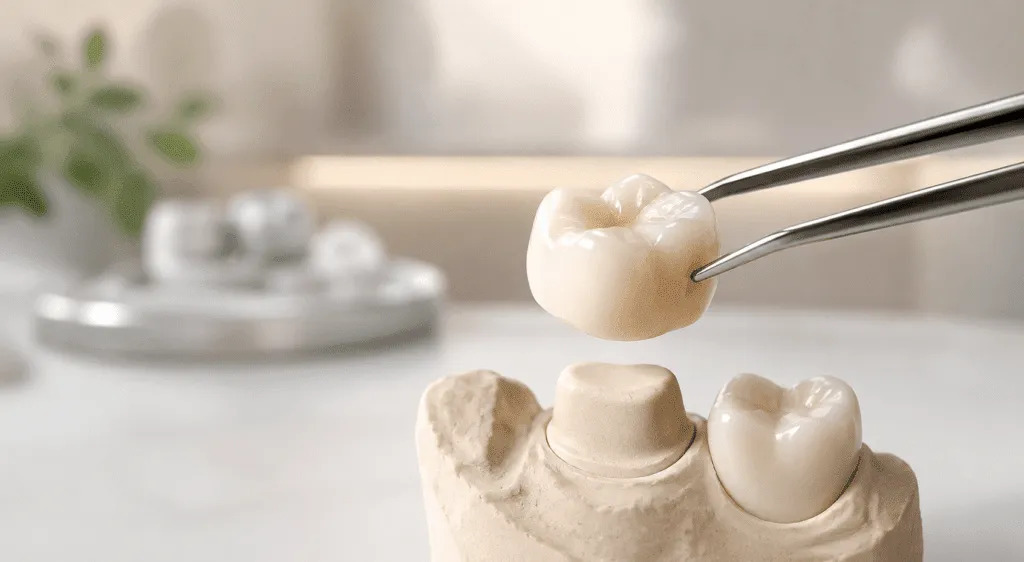
A crown coming off mid-meal, or a filling disappearing when you bite into something, is alarming out of proportion to the actual risk. In most cases the tooth is not in immediate danger. What matters is protecting the exposed surface and getting it seen reasonably soon, because an unprotected tooth deteriorates faster than people expect.
First, keep the piece
If a crown has come off whole, rinse it, dry it and keep it somewhere safe. A crown that is undamaged and came off cleanly can often be re-cemented, which is far cheaper and quicker than making a new one. Bring it to the appointment even if it looks chipped, because the dentist can tell more from the crown than from a description of it.
A lost filling is different. Filling material cannot be reused, so there is nothing to bring, but it is still worth checking that you have not swallowed or inhaled a fragment. Swallowing a small piece is harmless. Inhaling one is not, so if the piece went missing during a coughing fit and you have since developed a persistent cough or breathlessness, see a doctor.
Protecting the tooth in the meantime
- Keep the area clean. Brush gently around it and rinse with warm salt water after meals. Exposed dentine collects debris quickly.
- Chew on the other side. The remaining tooth walls are unsupported and can fracture under load. This is the single most useful thing you can do.
- Avoid extremes. Very hot, very cold, sweet and acidic food and drink will all provoke the exposed surface.
- Use a temporary dental cement from the pharmacy for a lost crown or filling, if you are more than a day or two from an appointment. It protects the surface and reduces sensitivity. It is not a repair, and it will not hold under normal chewing for long.
- Do not use household glue, superglue included. It is not safe in the mouth, it contaminates the bonding surfaces, and it can turn a simple re-cementation into a remake.
- Smooth a sharp edge with dental wax if it is cutting your tongue or cheek.
When it becomes urgent
Move from soon to today if any of the following appear:
- Severe or throbbing pain, or pain that wakes you.
- Swelling in the gum or face, which suggests infection. Spreading facial swelling, difficulty swallowing or breathing is a hospital matter.
- The tooth has fractured further, particularly below the gum line.
- Pain when you bite down, which can indicate the remaining structure is flexing or cracked.
- Visible pink or red at the base of the cavity, which is exposed pulp tissue.
Why they come out
Restorations rarely fail without a reason, and identifying it changes what happens next.
Decay at the margin is the most common cause. Bacteria work into the junction between the restoration and the tooth, undermine it, and the restoration loses its foundation. This is why a re-cemented crown sometimes comes off again within months if the underlying decay was not addressed.
Grinding applies forces the restoration was not designed for. If you have lost more than one restoration, this is worth investigating. See teeth grinding and occlusal splints.
Insufficient remaining tooth structure means there was not enough to retain the restoration in the first place, which may point toward a different design next time.
Age. Cements and bonding degrade over years. A crown that has served well for a long time and comes off cleanly is often simply due.
What happens at the appointment
The dentist will examine the tooth and take an x-ray to check for decay beneath the restoration and the state of the remaining structure. If the tooth is sound and the crown is intact, re-cementation is usually straightforward. If there is decay, that is removed first, and depending on how much tooth is left the outcome may be a new filling, a new crown or an onlay. Where too little structure remains, the conversation moves to the options for replacing the tooth.
The unwelcome but honest point is that a tooth left unprotected for months often needs more than it would have needed in the first week. Shifting of the neighbouring teeth into the space can also stop a crown seating properly, which turns a re-cementation into a remake.
What it costs
An emergency examination at Civic Gentle Dental Care starts from $70 to $110, with x-rays at $52 each as needed. Re-cementing an existing intact crown is at the lower end of restorative costs and quoted on the day. Where a replacement is needed, tooth-coloured fillings range from $209 to $450 and porcelain crowns start from $1,800. Current fees are on our price list, and there is more on emergency dental appointments in Canberra and on dental crowns.
Common questions
Can I put the crown back on myself?
Temporary dental cement from a pharmacy can hold a crown in place short term, and the instructions on the packet are worth following carefully. It is a stopgap, not a repair, and the tooth still needs examining.
How long can I leave it?
Aim for days rather than weeks. The exposed surface is vulnerable to decay and fracture, and the neighbouring teeth begin to drift.
Why does it hurt so much when I breathe in?
Cold air moving across exposed dentine triggers the same nerve response as a cold drink. Covering the surface with temporary cement usually settles it.
Will the same crown fit again?
If it came off intact and the tooth underneath is sound, usually yes. If decay has to be removed, or the teeth have shifted, a new one may be required.
Booking an appointment in Canberra City
Civic Gentle Dental Care is at Suite 8, Level 3/161 London Circuit, Canberra City, a short walk from the Canberra Centre. To arrange an appointment, call (02) 6247 0224 or send us a message through our contact page.
This article is general information only and is not a substitute for individual dental advice. Whether a treatment is suitable for you, and what it will involve, can only be determined after an examination by a dentist. Any prices mentioned are estimates drawn from our current price guide and are not a quote.