
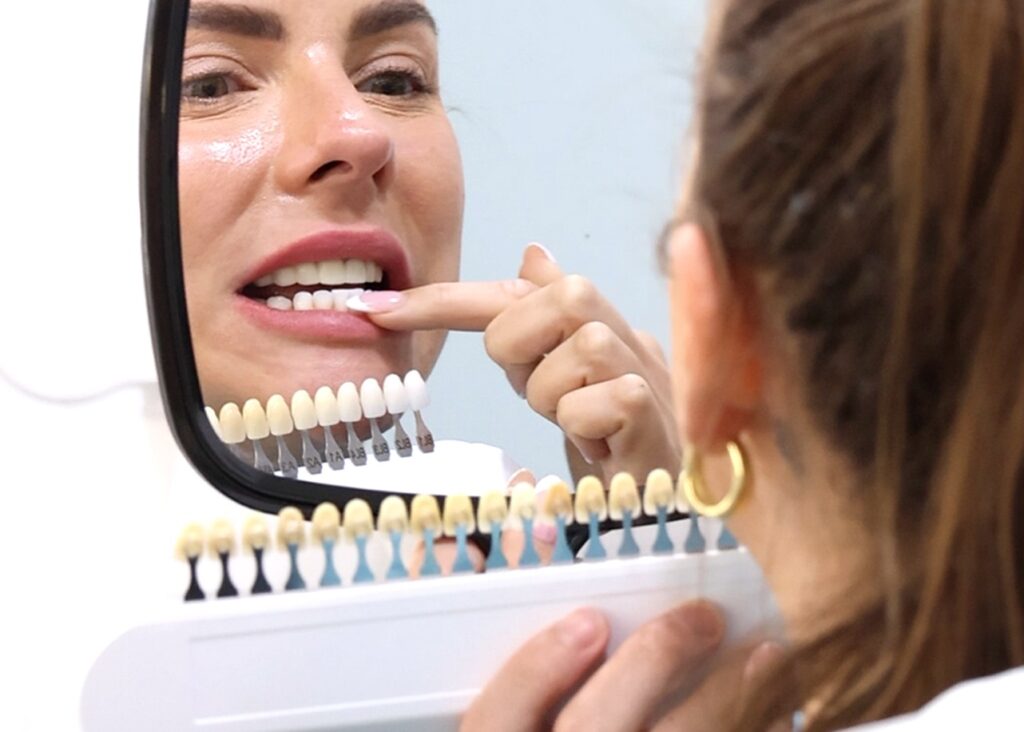
Spring and summer bring weddings, graduations, milestone birthdays and end-of-year events, and with them a predictable pattern of enquiries: someone has an event in ten days and wants their teeth whitened for it.
It is usually possible. It is rarely ideal. Here is why, and what a sensible timeline looks like.
Why timing matters
Three things make last-minute whitening a poor plan.
The shade rebounds. Teeth dehydrate slightly during whitening, which makes them look lighter immediately afterwards than they will a week later. The colour settles over roughly two weeks. Judging the result on the day of treatment is judging a temporary appearance.
Sensitivity is common. Most people experience some sensitivity during and shortly after whitening. It typically settles within a few days, but nobody wants to be managing it on the morning of an event.
Problems need finding first. Whitening gel reaching exposed dentine through a cavity, a crack or a failing filling margin causes significant discomfort. An examination beforehand is not a formality. If it turns up decay or gum inflammation, that needs treating before whitening, and the timeline extends.
A sensible schedule
Twelve weeks before
Book an examination and clean. This does two things: it identifies anything that needs treating first, and the clean itself removes surface stain, which for some people turns out to be most of what they wanted. Judge whether you still want whitening after the clean, not before it.
Eight to ten weeks before
Complete any treatment identified. If you have restorations on front teeth that will need replacing to match the new shade, this is the point at which that gets planned, because the sequence matters. Whitening comes first, the restoration second, and the reasons are set out in why whitening does not change crowns and veneers.
Four to six weeks before
Whiten. This leaves room for a second round if the result is not what you hoped, time for sensitivity to settle completely, and time for the shade to stabilise so you know what you are actually taking to the event.
Two weeks before
If new restorations are being matched to the whitened shade, this is when they are made. Two weeks after whitening is also when bond strength has returned to normal, which matters for anything being bonded.
The week of
Nothing. A polish at most. This is not the week to try something new.
If you have less time than that
A single in-chair whitening appointment a week or more before the event is workable for many people, provided an examination confirms there is nothing that would make it uncomfortable. Leave at least seven days for sensitivity to settle. Avoid the two or three days immediately before an event entirely.
Managing sensitivity
- Start a desensitising toothpaste containing potassium nitrate a week or two before treatment, and continue afterwards.
- Use the take-home trays for shorter sessions rather than longer ones if sensitivity builds.
- Take a break of a day or two between applications rather than pushing through.
- Tell the dentist if you have a history of sensitivity, so the concentration and protocol can be adjusted from the start.
Protecting the result
The first forty-eight hours after whitening are when teeth are most receptive to picking up new stain. Keep to lighter-coloured food and drink during that window: avoid coffee, tea, red wine, cola, curry, beetroot, soy sauce and berries. After that, ordinary habits resume, with rinsing after staining drinks and a straw for iced coffee making a modest difference over time.
Most people maintain the result with occasional take-home gel top-ups rather than repeating in-chair treatment. Your trays are reusable.
What it costs
At Civic Gentle Dental Care, whitening packages start from $489. Take-home whitening alone is $489, in-chair whitening alone starts from $699, and a combined in-chair and take-home package is $998. The package includes in-chair whitening with a professional system plus take-home gels and trays. A new patient examination and clean, which should come first, starts from $219.
Whitening is a cosmetic treatment and is generally not covered by health fund extras, though the examination and clean usually are. Current fees are on our price list, with more on our teeth whitening page.
If whitening is not the answer
Whitening lightens natural tooth structure. It does not change the shape, position or alignment of teeth, it does not close gaps, and it has limited effect on staining from tetracycline, fluorosis or a single root-treated tooth that has darkened. Where the concern is shape or alignment rather than colour, veneers or clear aligner treatment address different problems and run on much longer timelines. Both need planning many months ahead of an event, not weeks.
Common questions
How long do the results last?
It varies with diet, smoking and maintenance. Teeth gradually take up stain again, and periodic top-ups with take-home gel are the usual approach. No fixed duration can be promised.
Is in-chair or take-home whitening better?
They work through the same chemistry at different concentrations over different durations. In-chair produces a faster change; take-home allows gradual control and easy top-ups. Many people use the combination for that reason.
Will whitening work on my teeth?
Response varies between individuals and depends on the cause of the discolouration. Yellowish discolouration generally responds better than grey. An examination beforehand gives a realistic expectation for your teeth.
Can I whiten while pregnant or breastfeeding?
Elective cosmetic treatment is generally deferred during pregnancy and breastfeeding. Discuss it with your dentist and your doctor.
Booking an appointment in Canberra City
Civic Gentle Dental Care is a dentist in Canberra at Suite 8, Level 3/161 London Circuit, Canberra City, a short walk from the Canberra Centre. To arrange an appointment, call (02) 6247 0224 or send us a message through our contact page.
This article is general information only and is not a substitute for individual dental advice. Whether a treatment is suitable for you, and what it will involve, can only be determined after an examination by a dentist. Any prices mentioned are estimates drawn from our current price guide and are not a quote.