
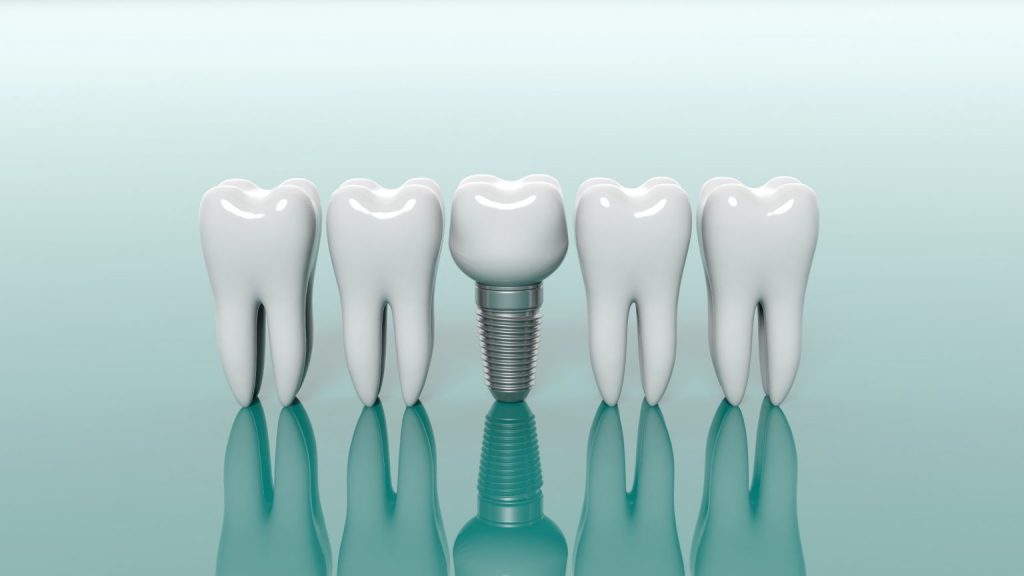
A bridge is a single fixed unit: crowns on the teeth either side of a gap, joined to a false tooth that spans it. Because the units are joined, floss cannot pass down between them the way it does between natural teeth. The false tooth also rests against the gum without a root, creating a space underneath that traps food and plaque.
That space is where bridges fail. Not through the porcelain breaking, but through decay in the supporting teeth at the crown margins and gum disease under the span. Both are preventable, and both are a matter of daily cleaning technique.
What to use
Superfloss
Purpose-made for this. It has three sections: a stiffened end that threads into the space under the false tooth, a spongy middle that cleans the span, and regular floss at the other end for the margins.
Method: thread the stiff end through the space between the gum and the underside of the false tooth, from the cheek side toward the tongue side. Pull the spongy section through, then work it back and forth along the underside of the false tooth and up against each supporting tooth. Repeat daily.
Floss threaders with ordinary floss
A loop of plastic that carries regular floss through the same space. Slightly more fiddly than superfloss, cheaper, and effective once you have the knack.
Interdental brushes
Where the space beneath the span allows one, a small interdental brush passed underneath is quick and effective. A dentist or hygienist can size one for you, which is worth doing rather than guessing, since forcing an oversized brush is uncomfortable and can irritate the tissue.
Water flosser
Particularly good around bridges, because a directed jet reaches under the span easily. Use it alongside superfloss or an interdental brush rather than instead of them, since water is less effective at disrupting adherent plaque than physical contact.
The margins matter as much as the span
The junction where each crown meets its supporting tooth is the most common site of failure. Decay there often causes no symptoms, because the supporting teeth may have had root canal treatment, and by the time it is detected the whole bridge may need replacing. Brush that margin deliberately, angling the bristles into the gum line, and clean between the bridge and the adjacent natural teeth at each end.
Daily routine
- Brush twice daily with a soft brush and fluoride toothpaste, paying particular attention to the crown margins at the gum line.
- Clean under the span once a day with superfloss, a threader or an interdental brush.
- Clean between the bridge and the neighbouring natural teeth at both ends.
- Spit without rinsing, so the fluoride stays on the margins.
- Keep up regular check-ups so the margins and the supporting teeth can be examined and x-rayed.
Warning signs
- Bleeding from the gum under or beside the bridge.
- A persistent bad taste or odour localised to that area. See persistent bad breath.
- Food packing under the span more than it used to, which can indicate the fit has changed.
- Sensitivity in a supporting tooth, or discomfort on biting.
- Any movement in the bridge, which needs prompt attention. A bridge that has debonded on one side while remaining attached on the other allows bacteria in with no way out, and decay progresses quickly underneath.
- A dark line appearing at a crown margin.
Getting longer service from it
Beyond cleaning: avoid biting hard food directly with the bridge, do not use your teeth as tools, and wear a splint if you grind, since a bridge concentrates grinding forces across joined units. See teeth grinding and occlusal splints. Bridges are a long-term restoration rather than a lifetime one, and how long yours serves depends heavily on the health of the supporting teeth, which is largely in your hands day to day.
If the bridge does fail
Where one supporting tooth develops decay or loses support, the whole bridge usually has to come off, and the replacement conversation may look different from the first one. That is a reason to take the cleaning seriously rather than a reason for alarm. The options are set out in implant, bridge or denture for a missing tooth and, for anterior cases, replacing a front tooth.
What it costs
Bridges are quoted per unit according to how many teeth are involved; porcelain crowns at Civic Gentle Dental Care start from $1,800, which gives an indication of the per-unit cost. Regular maintenance visits are the cheaper end of the equation: our consultation and clean package starts from $219. Superfloss, threaders and interdental brushes are inexpensive and available from any pharmacy.
Current fees are on our price list, with more on dental bridges and cleans at our Canberra practice.
Common questions
Can I use regular floss on a bridge?
Not between the joined units, because floss cannot pass through the connector. You need superfloss, a threader or an interdental brush to reach underneath the span.
How often should I clean under it?
Once a day, as part of your normal routine.
Can the supporting teeth still decay?
Yes. They are natural teeth under crowns, and the margin at the gum line is the most common site. This is why daily cleaning and regular examination matter.
Is a water flosser enough on its own?
It helps considerably and is easy to use, but pairing it with superfloss or an interdental brush cleans the surfaces more thoroughly.
Booking an appointment in Canberra City
Civic Gentle Dental Care is a dentist in Canberra City at Suite 8, Level 3/161 London Circuit, a short walk from the Canberra Centre. To arrange an appointment, call (02) 6247 0224 or send us a message through our contact page.
This article is general information only and is not a substitute for individual dental advice. Whether a treatment is suitable for you, and what it will involve, can only be determined after an examination by a dentist. Any prices mentioned are estimates drawn from our current price guide and are not a quote.