
A conventional crown takes two appointments separated by a couple of weeks, with a temporary crown bridging the gap. A CEREC crown compresses that into a single visit: the tooth is scanned, the crown designed on screen, milled from a ceramic block in the surgery and bonded in place the same day.
For anyone who has lost a temporary crown on a weekend, the appeal is obvious. Here is what the appointment actually involves.
Step by step
1. Assessment and preparation
The dentist confirms a crown is the right restoration, which comes down to how much sound tooth structure remains. We set out that reasoning in how dentists decide between a filling and a crown. The tooth is then numbed, any decay or failing filling removed, and the tooth shaped so the crown will seat correctly and have even thickness.
2. Digital scan
Instead of a tray of impression material, a small camera is passed over the prepared tooth, the opposing teeth and the bite. This builds a three-dimensional model on screen within a few minutes. No impression material, no gagging, and the scan can be checked and repeated instantly if any area is unclear.
3. Design
The dentist designs the crown on the scan: the anatomy of the biting surface, the contact points with neighbouring teeth, the margin where crown meets tooth, and the way it meets the opposing teeth. This takes ten to fifteen minutes and can be adjusted on screen before anything is made.
4. Milling
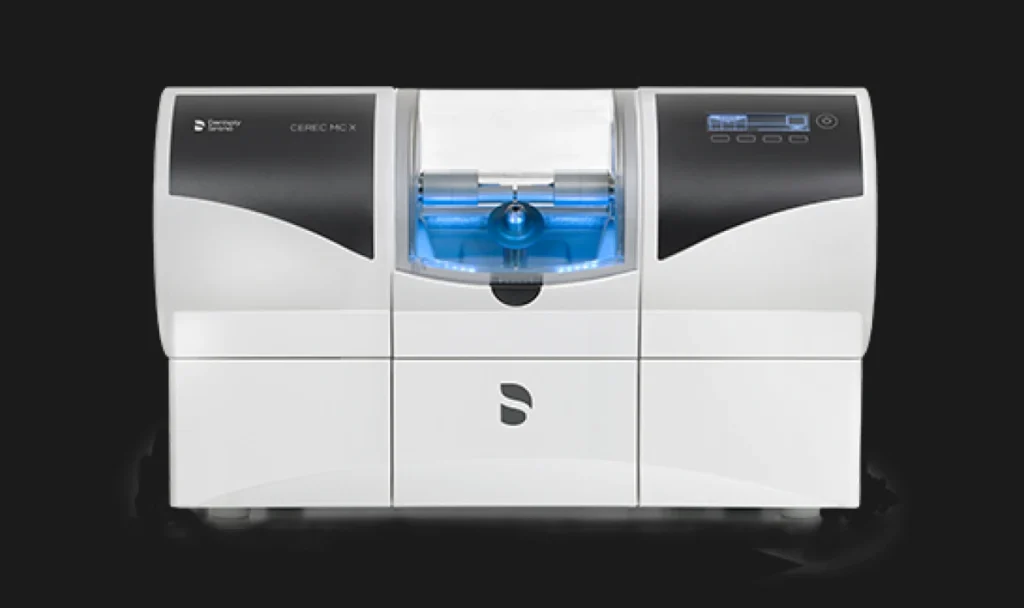
The design is sent to a milling unit in the practice, which cuts the crown from a solid ceramic block. This typically runs for ten to twenty minutes depending on the restoration. Most patients wait in the chair or take a short break.
5. Characterisation and fitting
The crown may be stained and glazed in a small furnace to refine the shade and surface texture. It is then tried in, the fit and margins checked, the bite adjusted, and the crown bonded to the tooth. The whole appointment usually takes around two hours from start to finish.
How it compares with a laboratory crown
Same-day crowns remove the second appointment, the temporary crown and the two-week wait. Temporary crowns are the source of most of the inconvenience in conventional crown treatment: they come off, they can be sensitive, and they restrict what you can eat. Avoiding them is not a trivial benefit.
Laboratory crowns retain an advantage where appearance is the dominant concern. A ceramist layering porcelain by hand can build internal colour and translucency that a milled monolithic block cannot fully reproduce. For a single front tooth that has to match its neighbours exactly, a laboratory crown made by hand is often the better choice. Our group maintains a dedicated in-house ceramic laboratory in North Sydney for exactly this kind of work.
For back teeth, where strength and function matter more than subtle optical characteristics, a same-day ceramic crown performs well and saves considerable time.
When a same-day crown is not the right choice
- Where the tooth needs root canal treatment first, which has to be completed before a definitive crown.
- Where the gum needs to heal or be reshaped before an accurate margin can be captured.
- Where the appearance demands hand-layered porcelain, typically a single anterior tooth.
- Where a bridge or a more complex multi-unit restoration is planned.
- Where active gum disease or decay elsewhere needs treating first.
The dentist will tell you which applies before you book the longer appointment.
Afterwards
The crown is bonded, so there is no waiting period before eating, though the anaesthetic will take a couple of hours to wear off. Mild sensitivity for a few days is common. Contact the practice if the bite feels high, if sensitivity is worsening rather than settling, or if anything catches when you floss. A crown is cleaned like a natural tooth, with particular attention to the margin at the gum line, which is where problems begin if they begin at all.
What it costs
Porcelain crowns at Civic Gentle Dental Care start from $1,800. The final figure varies with the condition of the tooth, the amount of enamel wear and the extent of decay present. Where root canal treatment is needed first, that ranges from $1,200 to $2,000 and excludes the final restoration. You will receive an itemised plan before treatment begins, and most health funds pay a rebate toward major dental under extras cover. See our price list, our CEREC same-day crowns page and our general dental crowns page.
Common questions
Is a milled ceramic crown as strong as a laboratory one?
Modern milled ceramics are strong materials well suited to posterior restorations. Material choice is made case by case according to where the tooth sits and how heavily it is loaded.
How long does the appointment take?
Around two hours in most cases, covering preparation, scanning, design, milling and fitting.
Can I have a same-day crown on a front tooth?
Often yes, but where an exact match to adjacent natural teeth is critical, a hand-layered laboratory crown may give a better aesthetic result. The dentist will discuss which suits your case.
Do I still need a temporary crown?
No. The final crown is fitted at the same appointment, which is the point of the technique.
Booking an appointment in Canberra City
Civic Gentle Dental Care is a Canberra City dentist at Suite 8, Level 3/161 London Circuit, a short walk from the Canberra Centre. To arrange an appointment, call (02) 6247 0224 or send us a message through our contact page.
This article is general information only and is not a substitute for individual dental advice. Whether a treatment is suitable for you, and what it will involve, can only be determined after an examination by a dentist. Any prices mentioned are estimates drawn from our current price guide and are not a quote.