Every tooth has five surfaces. A toothbrush cleans three of them. The two it cannot reach, the surfaces where teeth touch each other, are where decay between teeth begins and where gum disease most often starts.
This is why interdental cleaning is not an optional extra to brushing. It is the half of the job the brush cannot do.
The options
Floss
Suits tight contacts where nothing else fits. Cheap, portable, and effective when used correctly, which is the caveat. Most people snap it in, run it up and down once and move on, which cleans very little.
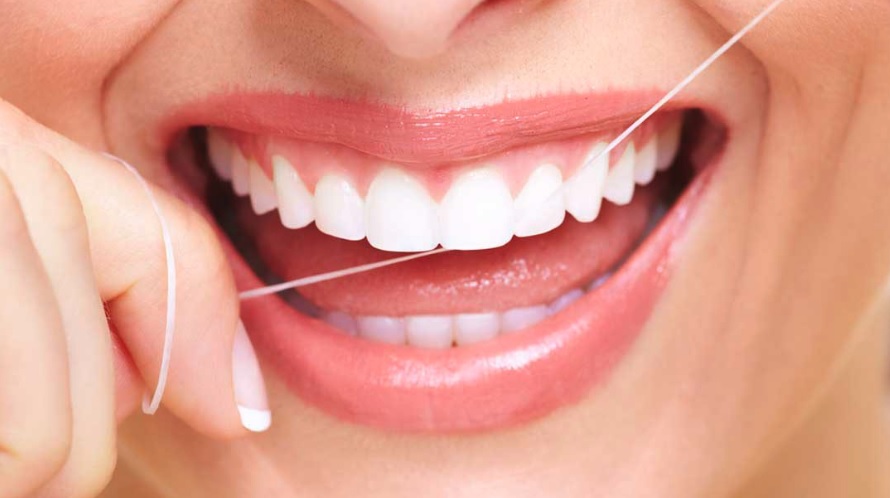
How to use it: take about 45cm, wind most of it around one middle finger and the rest around the other. Guide it between the teeth with a gentle sawing motion rather than snapping it down onto the gum. Then curve it into a C shape against one tooth, slide it just under the gum until you feel resistance, and move it up and down several times against that surface. Then curve it the other way and repeat against the neighbouring tooth. Each gap has two surfaces and needs both. Move to a clean section of floss as you go.
Interdental brushes
Small tapered or cylindrical bristle brushes that come in a range of sizes. Where the gaps allow them, they remove more plaque than floss and most people find them considerably easier, which matters more than any theoretical advantage.
How to use them: insert gently at a slight angle, without forcing. Move in and out a few times. Use the largest size that fits without pressure, and be aware that different gaps in your mouth need different sizes. A dentist or hygienist can size them for you, which is worth doing once rather than guessing.
Floss picks and harps
Convenient and better than nothing, but the fixed span makes it difficult to curve the floss around each tooth properly, so they tend to clean the contact point rather than the surfaces either side. Reasonable for travel and for reaching the back teeth. Not the first choice for daily use if you can manage floss or interdental brushes.
Water flossers
Useful for people with braces, bridges, implants or limited dexterity, and effective at flushing debris and reducing gum inflammation. They are less effective than floss or interdental brushes at disrupting the sticky plaque film adhering to the tooth surface, so they work well alongside one of those rather than instead of them.
Superfloss and threaders
Necessary around bridges and under the false tooth of a bridge, and around fixed retainers. The stiff end threads through, the spongy section cleans the span. See cleaning under a dental bridge.
Which should you use?
The one you will actually use every day. That is not a platitude; adherence is the dominant variable. Beyond that, a rough guide: tight contacts with no visible gaps favour floss. Visible spaces, receded gums or larger triangular gaps favour interdental brushes. Braces, bridges and implants usually need a combination, often with a water flosser added.
Most people benefit from having this assessed once rather than choosing off a supermarket shelf. Gap sizes vary across a single mouth.
Timing and frequency
Once a day is enough. Doing it before brushing has a small advantage, because it loosens debris and lets fluoride toothpaste reach between the teeth afterwards. Evening tends to suit most people. Consistency matters far more than the order.
If your gums bleed
Bleeding when you start or restart interdental cleaning is common and reflects existing inflammation rather than damage from the cleaning. It should settle within one to two weeks of daily use. Bleeding that persists beyond that needs examining. See bleeding gums: why it happens and when to act.
Floss that consistently shreds or catches in one particular spot is a finding, not a nuisance. It usually indicates a rough filling margin, a chipped edge or decay at the contact point, and it is worth mentioning rather than working around.
What a professional clean adds
Interdental cleaning removes soft plaque. Once plaque hardens into calculus it bonds to the tooth and cannot be removed at home by any method. That is the part a professional clean does, and it is why the two are complementary rather than alternatives. Our new patient consultation and clean package starts from $219 and includes an examination, scale and clean, fluoride treatment and two bitewing X-rays. Current fees are on our price list, with more on cleans at our Canberra practice.
Common questions
Is flossing really necessary if I brush well?
Yes. No brushing technique reaches the surfaces where teeth contact each other, and those are the surfaces where decay between teeth and early gum disease begin.
Can interdental brushes make my gaps bigger?
No. Using a correctly sized brush does not widen the space. Gaps that appear after you start cleaning properly are usually inflamed gum tissue reducing back to its healthy contour.
How long should it take?
A minute or so once you are practised. Considerably longer at first, which is normal.
Does a water flosser replace floss?
For most people it supplements rather than replaces it. It is particularly valuable around braces, bridges and implants.
Booking an appointment in Canberra City
Civic Gentle Dental Care is a Canberra City dentist at Suite 8, Level 3/161 London Circuit, a short walk from the Canberra Centre. To arrange an appointment, call (02) 6247 0224 or send us a message through our contact page.
This article is general information only and is not a substitute for individual dental advice. Whether a treatment is suitable for you, and what it will involve, can only be determined after an examination by a dentist. Any prices mentioned are estimates drawn from our current price guide and are not a quote.