
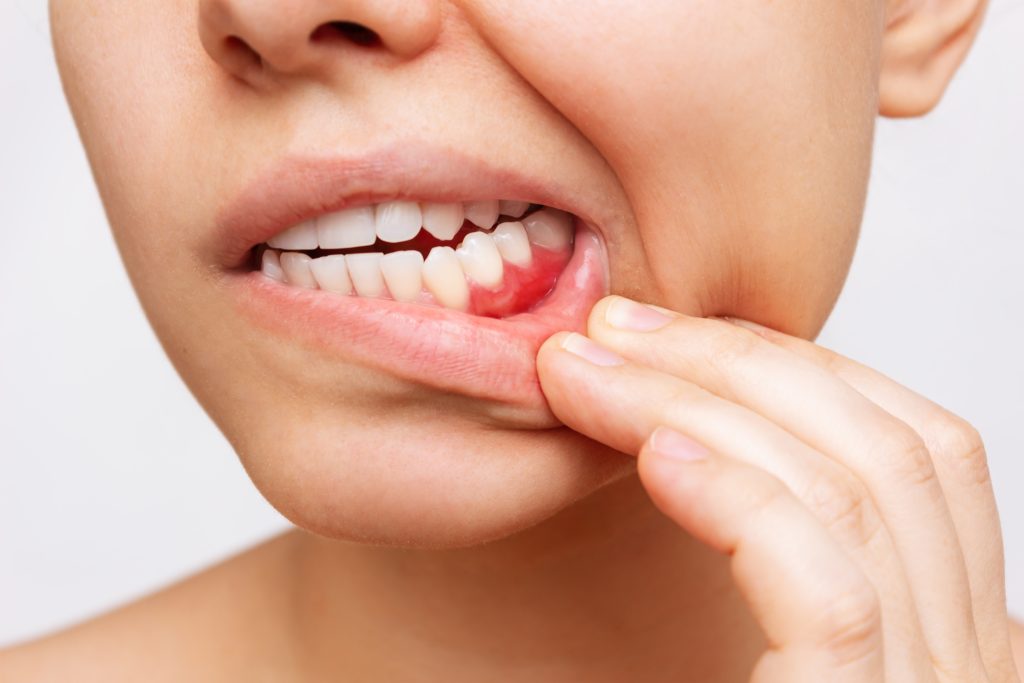
Gum disease starts as gingivitis, inflammation of the gums caused by plaque, which makes them red, puffy and prone to bleeding. Gingivitis is reversible with professional cleaning and better daily care. Left untreated, it can progress to periodontitis, where the bone holding the teeth is gradually lost. Periodontitis cannot be fully reversed, but it can usually be controlled with a deep clean under local anaesthetic and regular maintenance.
Gum disease is common: national surveys have found that around three in ten Australian adults have moderate or severe periodontitis. Because it is usually painless until late, many people do not know they have it.
Gingivitis: the early, reversible stage
Plaque left along the gumline irritates the gums. Signs include:
- Bleeding when you brush or floss
- Red, swollen or tender gums
- Bad breath that keeps coming back
At this stage the bone is not affected. A scale and clean to remove calculus, followed by good brushing and daily cleaning between the teeth, usually settles the gums within a few weeks. Our article on bleeding gums explains the first steps.
Periodontitis: when bone is lost
When inflammation continues, the gum starts to come away from the tooth, forming a pocket. Bacteria collect deep in the pocket, below where a toothbrush reaches, and the body’s response gradually destroys the bone supporting the tooth. Signs include:
- Gums that have shrunk back, making teeth look longer
- Persistent bad breath or a bad taste
- Teeth that feel loose or have moved, with new gaps appearing
- Pus around the teeth
- A change in how your teeth meet when you bite
Smokers may notice little bleeding, because smoking reduces blood flow to the gums and hides the classic warning sign.
Who is at higher risk
- Smokers and people who vape
- People with diabetes, particularly if blood sugar is not well controlled
- People with a family history of gum disease
- Pregnancy, when gums are more prone to inflammation
- People with crowded teeth or old restorations that trap plaque
How gum disease is diagnosed
At a check-up we measure the depth of the space between gum and tooth at several points around each tooth. Healthy pockets are shallow; deeper pockets with bleeding suggest periodontitis. X-rays show the bone level. Together, these show how far the disease has progressed.
What a deep clean involves
A deep clean, also called root planing or non-surgical periodontal treatment, goes further than a routine scale and clean. Under local anaesthetic, calculus and bacteria are removed from the root surfaces deep within the pockets, and the roots smoothed so the gum can heal against them. It is usually done over one or more appointments, often a section of the mouth at a time.
Afterwards, the gums tighten and the pockets often become shallower. Some sensitivity and a little gum shrinkage are common as swelling settles. We review the gums a few weeks later. Advanced cases may be referred to a periodontist, a specialist in gum disease.
Keeping it under control
Periodontitis is managed rather than cured, much like other long-term conditions:
- Regular maintenance cleans, often every three to four months rather than six
- Daily cleaning between the teeth, usually with interdental brushes. See cleaning between your teeth
- Stopping smoking, which greatly improves the response to treatment
- Good diabetes control, if relevant
Our article on what happens at a check-up and clean explains what each maintenance visit involves.
Why it matters beyond your mouth
Gum disease is the main cause of tooth loss in adults. It is also linked with diabetes, and treating gum disease can help with blood sugar control. Research has found associations with other conditions such as heart disease, though the nature of those links is still being studied.
Cost
Our new patient consultation and clean is $219, including an examination, scale and clean, fluoride treatment and two bitewing X-rays. If a deep clean is needed, it is quoted after the gums have been measured, because the fee depends on how many areas need treating. Details are on our check-up and clean page.
What happens at your first gum assessment
If we suspect gum disease, the first appointment focuses on measuring and recording. We chart the pocket depth at six points around each tooth, note where the gums bleed, check for recession and looseness, and take X-rays to see the bone level. These measurements give a baseline, so we can show you objectively whether the gums are improving after treatment.
We also ask about the factors that affect gum health: smoking or vaping, diabetes, medications, family history and how you clean at home. Gum disease has several contributing causes, and treating it well means addressing as many as possible, not only the calculus.
Gum disease and implants, crowns and bridges
Healthy gums are the foundation for any restorative or cosmetic work. Crowns and bridges placed on teeth with active gum disease can fail early, and implants are at risk of peri-implantitis, the implant equivalent of periodontitis. That is why gum disease is treated and stabilised before implants, veneers or orthodontic treatment begin. See our dental implants page.
Common questions
Can gum disease be cured?
Gingivitis can be fully reversed. Periodontitis can be stopped and stabilised, but lost bone does not usually grow back on its own.
Does a deep clean hurt?
It is done under local anaesthetic. The gums may feel tender for a few days afterwards.
Is bleeding when I floss normal?
No. It is a sign of inflammation. It usually settles within a couple of weeks of regular cleaning; if it does not, have it checked.
Will my teeth fall out?
Most people with treated and well-maintained periodontitis keep their teeth for life. The risk rises sharply when it is left untreated.
Booking an appointment in Canberra City
Civic Gentle Dental Care is a Canberra City dentist at Suite 8, Level 3/161 London Circuit, a short walk from the Canberra Centre. To arrange an appointment, call (02) 6247 0224 or send us a message through our contact page.
This article is general information only and is not a substitute for individual dental advice. Whether a treatment is suitable for you, and what it will involve, can only be determined after an examination by a dentist. Any prices mentioned are estimates drawn from our current price guide and are not a quote.