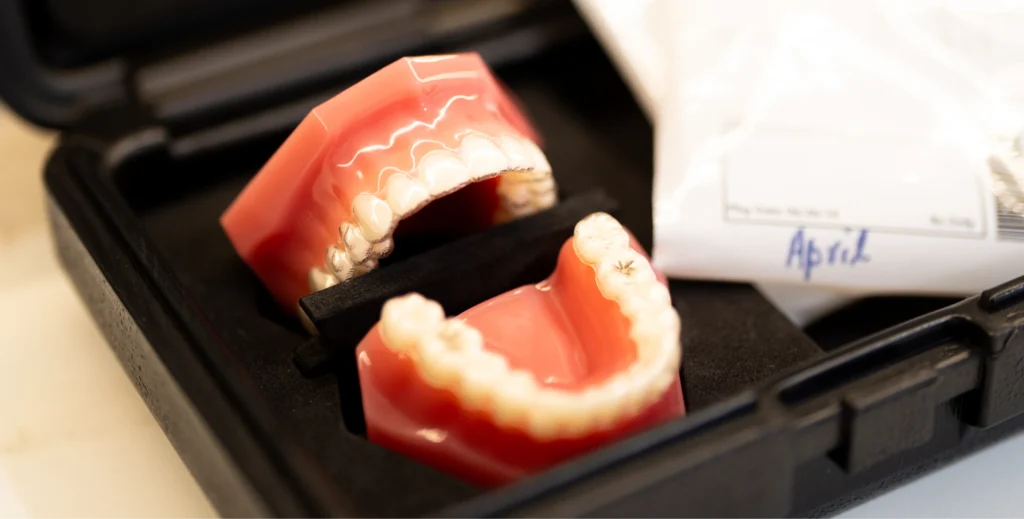
Spark and Angel Aligner are two clear aligner systems offered alongside Invisalign at Civic Gentle Dental Care. Both use removable, custom-made trays and treat a similar range of crowding, spacing and bite concerns. They differ in who makes them, the tray material and the planning features. At our practice, Spark and Angel Aligner are estimated at $500 less than Invisalign.
Comparison at a glance
| Spark | Angel Aligner | Invisalign (for reference) | |
|---|---|---|---|
| Manufacturer | Ormco (USA) | Angelalign Technology (Shanghai) | Align Technology (USA) |
| Tray material | TruGEN | masterControl S | SmartTrack |
| Planning software | Approver | iOrtho | ClinCheck |
| Features the manufacturer describes | Attachments, cut-outs, hooks and bite ramps | angelButton hooks, angelAttach attachments, Intelligent Root System | Attachments and elastic options |
| Estimated cost at Civic Gentle Dental Care | $3,700 – $8,490 | $3,700 – $8,490 | $4,200 – $8,990 |
What they share
Both follow the same treatment path: assessment, an iTero scan, review of a simulated plan, then trays worn for 20 to 22 hours a day and changed every one to two weeks. Reviews track progress and retainers hold the result. Neither is invisible.
Where they differ
Manufacturer
Spark is made by Ormco, an orthodontic company that also makes brackets and wires. Angel Aligner is made by Angelalign Technology, founded in 2003 and headquartered in Shanghai, which focuses on clear aligners.
Material
Ormco says TruGEN is designed for clarity and stain resistance. Angelalign describes masterControl S as a multi-layer material designed for steady force and tear resistance. These are manufacturer descriptions, and the feel of a tray varies between patients.
Planning features
Both allow attachments and elastics. Angelalign also describes an Intelligent Root System that can model roots and bone from CBCT and scan data. Ormco’s Approver allows cut-outs, hooks and bite ramps. Not every case needs these features.
Which is better?
Neither is better for everyone. Both can achieve planned tooth movement in suitable cases when the trays are worn as prescribed. We recommend a system after your assessment, and for some cases fixed braces or a specialist orthodontist is the better option.
Cost
Our current price guide estimates Invisalign treatment at $4,200 to $8,990 and Spark or Angel Aligner treatment at $3,700 to $8,490. Within each range, your fee depends on your treatment plan. Your first clear aligner consultation is complimentary.
Risks
All aligner systems carry similar risks, including soreness with new trays, speech changes, gum irritation, decay if hygiene slips, root shortening and movements that are not fully achieved. Read about treatment risks, recovery and alternatives.
Frequently asked questions
Are Spark and Angel aligners cheaper than Invisalign?
Yes. Our price guide estimates Spark and Angel Aligner at $3,700 to $8,490, $500 less than Invisalign at $4,200 to $8,990.
Do Spark and Angel aligners need attachments?
Many aligner plans use small tooth-coloured attachments, whichever system is used. It depends on the movements in your plan.
How long does Spark or Angel treatment take?
Limited movements can take a few months and broader cases 12 months or longer.
Can I choose between Spark and Angel?
You can tell us your preference, and we will explain whether that system suits your case.
Read our guides to Spark aligners vs Invisalign and Angel aligners vs Invisalign, or see our pages on Spark aligners, Angel aligners and Invisalign. To find out which suits you, book a complimentary consultation or call (02) 6247 0224.
Angel Aligner, angelButton, angelAttach and iOrtho are trademarks of Angelalign Technology. Spark, TruGEN and Approver are trademarks of Ormco. Invisalign, SmartTrack and ClinCheck are trademarks of Align Technology. Results vary between patients. Discuss the risks, benefits and alternatives with your dentist before deciding on treatment.