
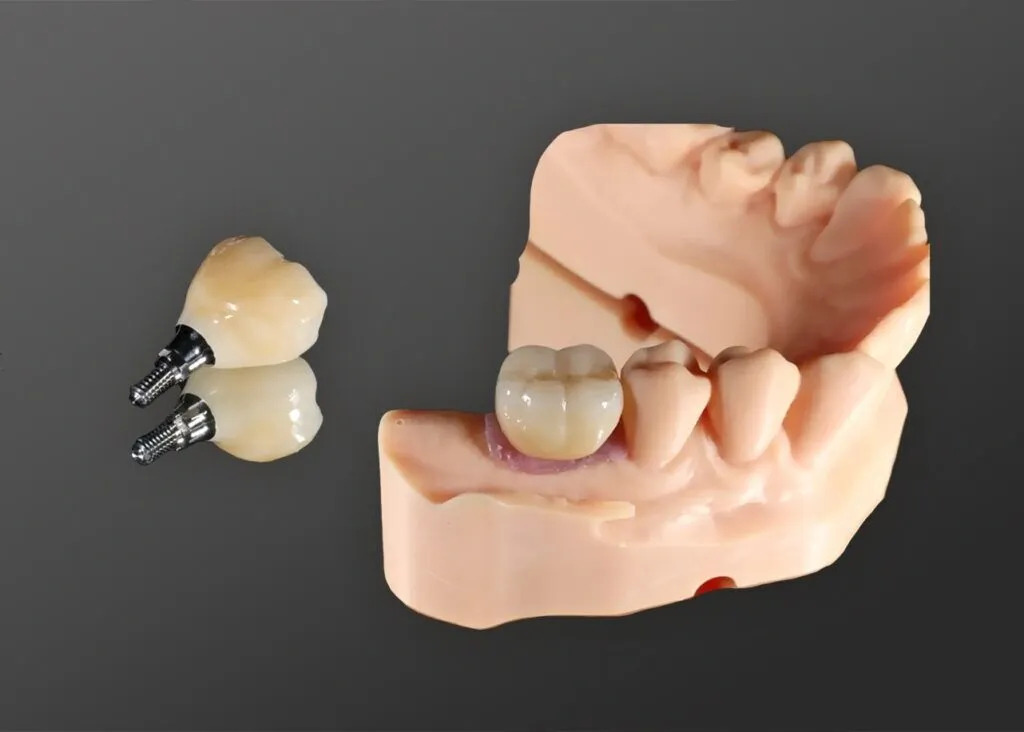
People are often surprised that a dental implant is not one appointment. It is a sequence of stages spread over months, most of which is waiting rather than treatment. Understanding why the waiting is there makes the timeline far easier to plan around.
Why it takes months
An implant is a titanium post placed into the jawbone to act as an artificial tooth root. What makes it work is osseointegration: bone growing into direct contact with the implant surface, locking it in place. That is a biological process on a biological schedule, typically three to six months depending on the site, the bone quality and individual healing. Loading an implant before integration is complete risks losing it.
Stage one: assessment and planning
The first appointment establishes whether an implant is appropriate. This includes an examination, photographs and a CBCT scan, which is a three-dimensional x-ray showing bone height, bone width and the position of nerves and sinuses. That scan determines implant size and angle, and whether the site has enough bone to begin with.
Gum disease and decay elsewhere are treated first. Smoking significantly increases the risk of implant failure and will be discussed frankly. Some medical conditions and medications, particularly those affecting bone metabolism, need consideration before proceeding.
Stage two: extraction and site preparation, if needed
Where the tooth is still present, it is removed and the socket usually grafted to preserve bone volume, then left to heal for around two to three months. Where the tooth has been missing a long time, bone may already have resorbed, and a graft or sinus lift may be needed, adding several months before placement.
In selected cases the implant can be placed at the same time as the extraction, which shortens the overall timeline. Whether that is possible is a judgement made from the scan and the condition of the socket.
Stage three: implant placement
Placement is usually done under local anaesthetic and takes around an hour for a single implant. The gum is opened, the site prepared to the planned dimensions, and the implant inserted. The gum is then closed over or around a healing cap. Most people describe the recovery as comparable to an extraction: some swelling and tenderness for a few days, managed with over-the-counter pain relief. Sleep dentistry is available where anxiety or the extent of surgery makes it appropriate.
Stage four: integration
The waiting period. Three to six months in most cases. During this time you continue normally, usually with a temporary tooth in place if the gap is visible. The implant is reviewed to confirm integration is progressing.
Stage five: abutment and impressions
Once integrated, a small connector called an abutment is fitted to the implant, and impressions or a digital scan are taken. This is when the final crown is designed. At our practice the porcelain crown on the implant is designed and made by a master ceramist in the group’s dedicated in-house ceramic laboratory.
Stage six: fitting the crown
The crown is fitted, the bite checked and adjusted, and any final refinements completed. From here the implant is reviewed at your regular check-ups like any other restoration.
Total time
A straightforward case with adequate bone and no extraction required commonly runs four to six months from placement to final crown. A case involving extraction, grafting and healing before placement can extend to nine to twelve months. Your dentist will give you a timeline specific to your circumstances after the scan, and it is reasonable to ask for it in writing.
Looking after an implant
Implants do not decay, but the gum and bone around them can become inflamed and lose support in a process called peri-implantitis, which behaves much like gum disease around a natural tooth. Daily cleaning around the implant, cleaning between the teeth, professional maintenance visits and not smoking are what protect the investment. Read more on gum inflammation and why it matters.
What it costs
Dental implants at Civic Gentle Dental Care start from $5,500, which includes the CBCT scan, planning and placement of the titanium implant, review of healing and integration, placement of the abutment, design of the porcelain crown by a master ceramist, insertion of the final crown and a final review with bite assessment and adjustments. Grafting, sinus lifts and extractions are quoted separately where required.
For patients missing a full arch, all-teeth-on-implants treatment starts from $24,990 per arch. Interest-free payment plans are available through external providers, subject to their assessment and approval, and early release of superannuation can be applicable for some patients and treatment types. See our price list, our dental implants page, and our comparison of implant, bridge and denture options.
Common questions
Is implant surgery painful?
The procedure is done under local anaesthetic, so you should not feel pain during it. Afterwards, most people report discomfort similar to an extraction for a few days.
How long do implants last?
Implants are designed as a long-term tooth replacement, and many function for decades. Longevity depends on gum health, bone maintenance, smoking, grinding and regular professional care rather than on the implant alone.
Can I have an implant if I have been missing the tooth for years?
Often yes, though bone tends to resorb in the absence of a tooth root, so grafting may be needed first. The CBCT scan answers this directly.
What if I grind my teeth?
Grinding increases load on the implant and its crown. It needs managing, usually with a splint, as part of the plan. See teeth grinding and occlusal splints.
Booking an appointment in Canberra City
Civic Gentle Dental Care is a dentist in Canberra City at Suite 8, Level 3/161 London Circuit, a short walk from the Canberra Centre. To arrange an appointment, call (02) 6247 0224 or send us a message through our contact page.
This article is general information only and is not a substitute for individual dental advice. Whether a treatment is suitable for you, and what it will involve, can only be determined after an examination by a dentist. Any prices mentioned are estimates drawn from our current price guide and are not a quote.